 Lithuania
 Liechtenstein
Form Analysis and Betting Implications
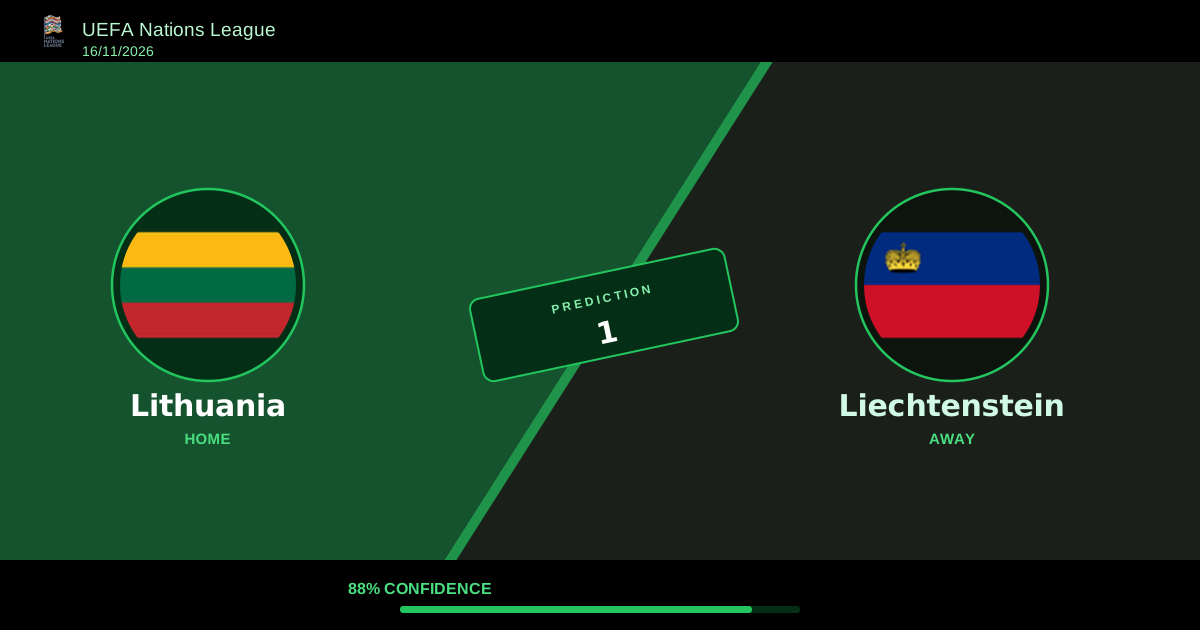
Lithuania enters this match with a mixed but improving form, having secured a crucial 3-0 home victory against Andorra in their recent fixtures. Their overall record of 4 wins, 5 draws, and 11 losses in the last 20 matches suggests inconsistency, yet their home form shows potential with 2 wins, 4 draws, and 3 losses. Scoring an average of 1.11 goals per home game while conceding 1.33 indicates a moderate offensive capability balanced by a somewhat porous defence. In contrast, Liechtenstein's form is bleak, with just 1 win and 1 draw against 18 losses in their last 20 outings. Their away form is particularly concerning, having conceded an average of 2.82 goals per match while scoring a mere 0.27. Their defensive frailties were evident in their 2-0 home defeat to Lithuania recently. This stark contrast in form, particularly Liechtenstein's inability to perform away from home, supports the market's favouritism towards Lithuania. However, the market may not fully account for Lithuania's sometimes erratic performances, potentially creating overlooked value in niche markets such as goal totals or clean sheets.
Market Analysis and Value Opportunities
In the match result market (1X2), Lithuania is heavily favoured with a model probability of 87% against the implied probability of 82.15% at odds of 1.15. This presents a value edge of 4.85 percentage points, highlighting a potential market inefficiency. The draw is priced at odds that imply an 11% chance, aligning closely with the model's assessment, while Liechtenstein's chances are seen as negligible at 2% model probability. Moving to the Over/Under 2.5 goals market, the model predicts a 37% likelihood of over 2.5 goals, suggesting limited value given typical market odds for this outcome. The Both Teams to Score (BTTS) market is similarly unattractive, with a model probability of just 20%, reflecting Liechtenstein's poor scoring record. A more prudent option might be the Double Chance market, where backing Lithuania or a draw (1X) at odds that suggest a higher probability could offer a safer return. This aligns with the teams' historical performances and current form dynamics. Ultimately, the most compelling market remains the straightforward home win, given the clear statistical backing and form trends.
Risk Assessment and Market Discipline
The primary risk to the value pick of Lithuania winning lies in their historical inconsistency, despite recent improvements. Lithuania's home form, while generally positive, includes some draws and losses, indicating potential vulnerabilities. Liechtenstein, although struggling significantly, have occasionally managed to avoid defeat, as seen in their 0-0 draw against Azerbaijan. The market's implied probability of a Lithuanian win at 82.15% might not fully account for these nuances, but the model's 87% confidence suggests this risk is mitigated. Failure scenarios include a possible underperformance by Lithuania or an unexpectedly resilient Liechtenstein defence. If the odds were to lengthen, reducing the implied probability below the model's forecast, the value would diminish. Bettors should monitor any significant market movements and reassess if the odds change substantially, ensuring the pick remains value-positive.
Final Betting Verdict and Strategy
The standout value pick for this encounter is Lithuania to win at odds of 1.15, presenting a value edge of 4.85 percentage points. The recommendation is backed by Lithuania's superior form and previous 2-0 victory against Liechtenstein. With the model assigning an 87% probability to a home win, the odds reflect an underestimation of their dominance. A secondary, safer alternative could be the Double Chance on Lithuania or a draw, which mitigates against any unexpected resilience from Liechtenstein. The primary risk to this pick is Lithuania's occasional inconsistency, as evidenced by their varied results in recent matches. However, given Liechtenstein's poor away form and historical struggles, the risk remains low. Should odds shift significantly, reducing the implied probability below the model's 87%, the bet would lose its value edge, necessitating reevaluation.