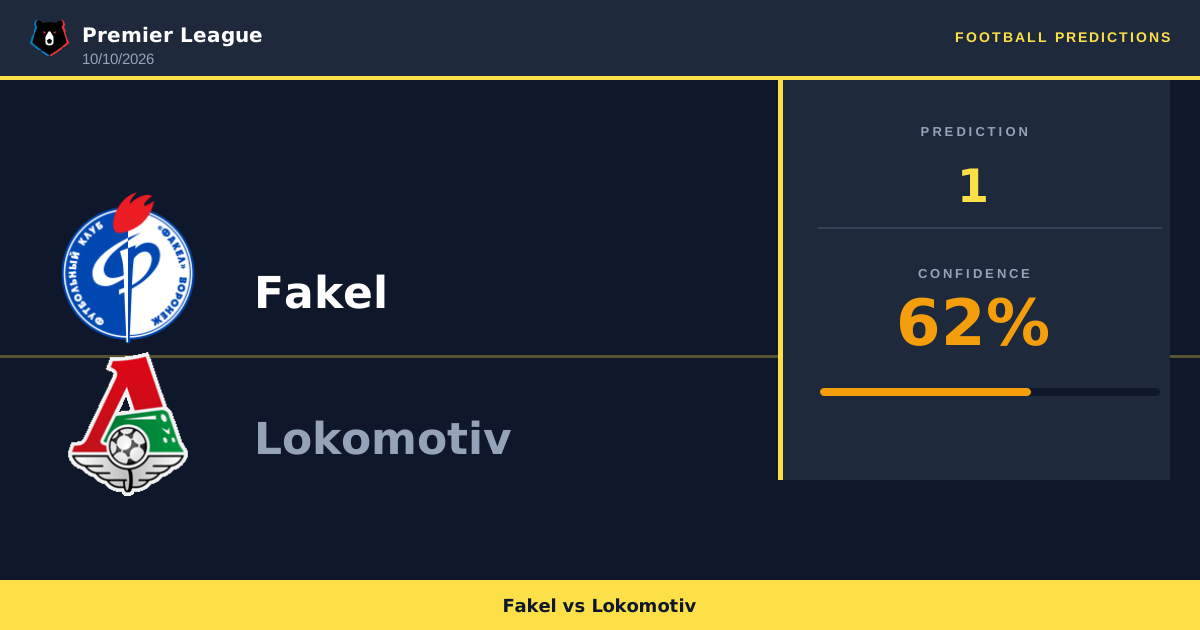
 Fakel
Fakel Lokomotiv
Assessing Form and Market Perceptions
With no recent form data available for either Fakel or Lokomotiv, we must rely on the expected goals (xG) and model probabilities to gauge potential outcomes. Fakel's xG of 1.51 compared to Lokomotiv's 0.97 indicates a stronger offensive capability, particularly at home. This expected goal superiority aligns with the model's 48% probability for a Fakel win. Without historical scorelines to consider, the market's pricing appears to be influenced heavily by these xG figures. Lokomotiv's lower xG suggests their attack may struggle against Fakel's defence, potentially justifying the market's scepticism about their chances. However, the absence of concrete form data means any assumptions about recent performances must be made cautiously. The prediction of a 1-0 scoreline further supports the premise that Fakel is more likely to secure a narrow victory. The market's pricing of a draw at 29% and a Lokomotiv win at 23% reflects a cautious approach, possibly overestimating Lokomotiv's resilience. Overall, the lack of recent form should temper any overconfidence in the model's predictions, but the available data does suggest value in backing Fakel.
Market Analysis and Value Opportunities
The primary market to consider is the match result, where Fakel is given a 48% probability of winning. This translates to implied odds of 2.08, matching the odds offered, hence providing a value edge of 2.92%. The draw is priced at odds reflecting a 29% probability, which aligns closely with model expectations, offering no clear value. Lokomotiv's win probability of 23% suggests odds of 4.35, but without odds data, the potential value remains speculative. In the Over/Under 2.5 goals market, the model indicates a 45% probability for over 2.5 goals. Without specific odds, assessing value is challenging, but the prediction of a low-scoring 1-0 result suggests the under 2.5 goals market might be safer. Both teams to score (BTTS) is predicted at 48%, implying a balanced market with limited edge. A Double Chance bet on Fakel or Draw (1X) would provide extra security, especially given Fakel's higher xG and home advantage. Without odds, the exact value is uncertain, but it could be a prudent choice for risk-averse bettors. Ultimately, the Fakel win market appears to offer the best value, given the model's confidence and slight edge.
Risk Assessment and Discipline
The primary risk factor in backing Fakel lies in the limited data available, which constrains the accuracy of the model's predictions. The reliance on expected goals (xG) as a primary metric means that any deviation in actual performance could invalidate the perceived value. The market's pricing reflects a cautious approach, likely due to the absence of recent form data, indicating that casual bettors might overestimate Lokomotiv's chances. Two realistic failure scenarios include an unexpected defensive lapse from Fakel leading to a Lokomotiv goal or a low-scoring draw that nullifies the value of backing Fakel outright. The market's balanced BTTS probability of 48% suggests an awareness of potential scoring from both sides, which could disrupt a clean sheet prediction. To maintain value, Fakel's odds should remain at or above 2.08; any significant drop would necessitate a reevaluation of the bet's attractiveness. As always, maintaining bankroll discipline and preparing for market shifts is essential in maximising betting success.
Conclusive Betting Verdict
Given the available data, the Fakel win at odds of 2.08 emerges as the best value bet, with a calculated edge of 2.92%. The model's 48% probability for a Fakel victory suggests a slight advantage over the implied odds, primarily driven by their expected goals superiority. This pick reflects the model's confidence in Fakel's home performance and offensive potential. For those seeking a safer option, a Double Chance bet on Fakel or Draw (1X) could offer more security, especially if odds reflect a fair return. However, the biggest risk remains the limited data set, which could undermine the model's assumptions. Without concrete form evidence, the prediction relies heavily on xG, which, while informative, cannot account for all match-day variables. Should Fakel's odds shift significantly or if new data emerges, reassessment would be necessary. Ultimately, disciplined staking and awareness of the model's limitations are crucial to managing risk.